Rubber is the floor you specify when performance comes before looks, though modern rubber does both. It grips underfoot, absorbs impact, resists heavy point loads and shrugs off the kind of treatment that would destroy other surfaces. For gyms, sporting facilities, plant rooms, healthcare and high-traffic back-of-house areas across Brisbane, the Gold Coast and the Sunshine Coast, rubber is often the only sensible answer. Here is how to specify it.
BUILD FLOOR supplies and installs commercial rubber flooring throughout South East Queensland. The rubber product page shows where it fits, and this article covers the technical choices behind it.
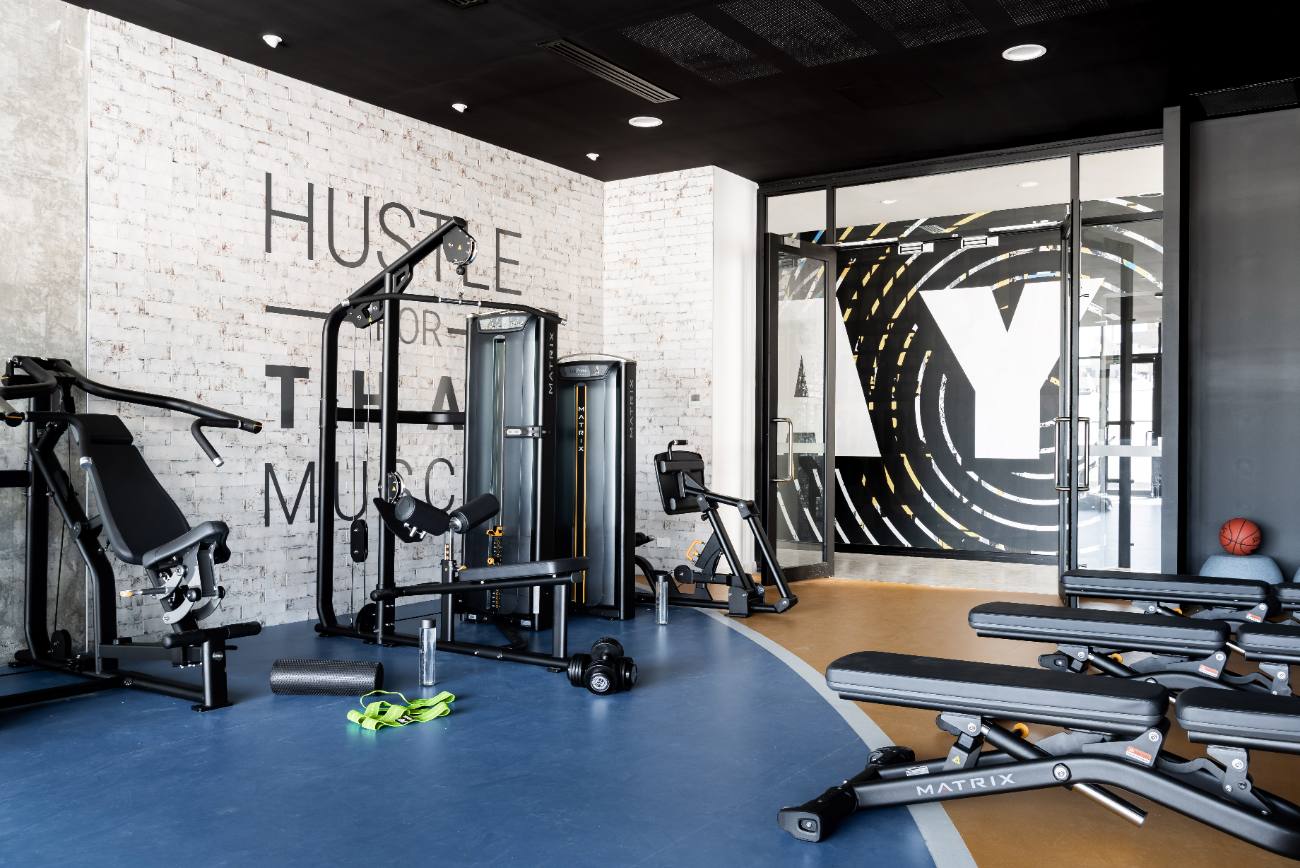
Rolled rubber versus rubber tiles
Commercial rubber comes in two main formats, and the right one depends on the size of the space and how it will be used.
Rolled rubber
Rolled rubber is supplied in wide rolls and laid out across the floor, giving fewer seams across large areas. It is the efficient choice for big gym floors, weights areas and sporting facilities where you want a continuous, stable surface. Thickness is selected to match the impact, so a free-weights zone gets a thicker, more shock-absorbent build-up than a general circulation area.
Rubber tiles and interlocking systems
Rubber tiles suit smaller areas, spaces with an awkward shape, and zones where individual sections may need to be lifted or replaced. Interlocking and loose-lay tile systems can also be useful where access to the subfloor needs to be retained. Tiles give flexibility, while rolls give continuity.
Slip resistance and safety
Rubber naturally offers strong slip resistance, which is why it crosses over into safety flooring for ramps, plant rooms, wet-adjacent areas and entries. As with vinyl, commercial projects should specify a product tested to AS 4586 with a slip rating suited to the area. For gym and sports environments the priority shifts toward shock absorption and force reduction, so the specification balances grip with the cushioning that protects users and equipment.
- Free-weights and performance zones: thicker rolled rubber for shock absorption and floor protection
- Functional training and circulation: medium-thickness rubber, grippy and hard-wearing
- Sporting courts and multi-use halls: sports-grade systems matched to the activity
- Plant rooms, ramps and back-of-house: slip-resistant rubber tested to AS 4586
Acoustics and impact
Rubber is also a serious acoustic performer. In multi-level gyms and fitness facilities, dropped weights generate impact noise and vibration that can travel through the structure to tenancies below. A correctly specified rubber build-up, sometimes combined with an acoustic underlay, reduces that impact transmission. This matters more and more as gyms move into mixed-use buildings across Brisbane and the Gold Coast.
For a gym in a multi-level building, the flooring is not just a surface. It is the acoustic and structural buffer between the weights and the tenant downstairs.
Subfloor and installation
Rubber is heavy and durable, but it still needs a sound, dry and level base. Slab moisture testing applies here as it does for every floor, and the adhesive system is selected for the product and the loads it will carry. For heavy rolled rubber, correct setting out and seam treatment keep the floor flat and stable under constant use. Get the prep right and a rubber floor will outlast almost anything else in the building.
Choosing a commercial rubber flooring installer in Queensland
A commercial rubber flooring installer should understand both the performance side, impact, slip and acoustics, and the practical side of laying heavy rolls flat and on programme. BUILD FLOOR supplies and installs rubber for fitness, sporting and commercial projects across South East Queensland, and you can see the breadth of our work on the project page.
Fitting out a gym, sports facility or high-traffic commercial space?
Get a rubber flooring quoteCommon questions from builders
What thickness of rubber flooring does a gym need?
It depends on the zone. Free-weights and performance areas need thicker rolled rubber for shock absorption and to protect the slab, while functional training and circulation areas can use a medium thickness. We match the build-up to each zone of the facility.
Does rubber flooring help with noise in a multi-level gym?
Yes. A correctly specified rubber system, often with an acoustic underlay, reduces the impact noise and vibration from dropped weights travelling to the level below. This is increasingly important for gyms in mixed-use buildings.
Do you install commercial rubber flooring across South East Queensland?
Yes. We supply and install gym, sports and safety rubber flooring across Brisbane, the Gold Coast, the Sunshine Coast and surrounding regions.